


"PPE items are a source of microplastic and chemical pollutants, a substrate to invasive species colonization, and a potential threat of entanglement, ingestion, and/or infection among apex predators"
- National Library of Medicine
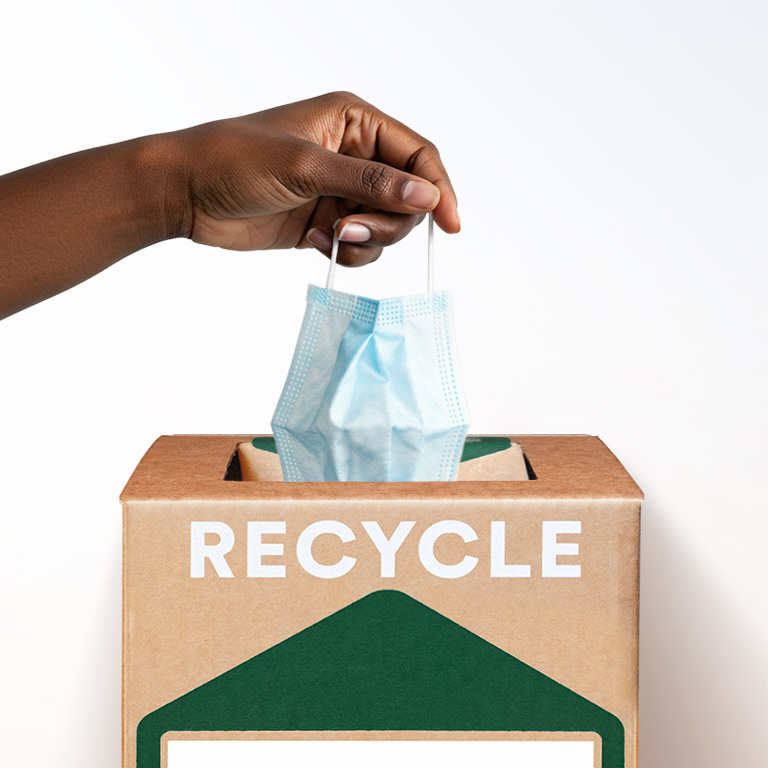
Disposable PPE Recycling and Disposal
Disposable masks, gloves, face shields, and other personal protective equipment (PPE) generally do not belong in curbside recycling. These items can contain plastics, fibers, and multiple components that conventional recycling programs are not designed to process. Used PPE may also be contaminated. EPA advises keeping masks, gloves, disinfectant wipes, and other PPE out of household recycling bins.
The priority is to maintain appropriate protection while managing waste safely. Recycling, laundering for reuse, and medical-waste treatment are different services; a collection program should not be described as recycling unless that is how it processes the accepted material.
Understanding the scale of PPE waste
A widely cited OceansAsia report estimated that approximately 1.56 billion disposable masks would enter the oceans in 2020. Its calculation used a global production projection of 52 billion masks and an assumed environmental loss rate of 3%. This was a model-based estimate, not a measured worldwide count, and should not be presented as a current annual figure.
Everyday disposal
For disposable PPE used in ordinary household or other non-health-care settings:
Place used masks and gloves in a securely closed trash bag unless a specialized collection program explicitly accepts them.
Keep masks, gloves, and wipes out of curbside recycling.
Use a secure trash container that is not overflowing to prevent litter from escaping.
When practical, cut mask straps or ear loops before disposal to reduce wildlife-entanglement hazards.
Follow any additional instructions from your employer, school, local waste authority, or collection provider. Specialized programs have their own acceptance and packaging requirements, which may differ from ordinary household disposal instructions.
PPE requiring special handling
Do not assume that every used mask or glove is regulated medical waste. Likewise, do not assume that PPE contaminated with blood, potentially infectious material, or hazardous substances can go into household trash or a recycling collection box. The appropriate waste stream depends on the contamination, setting, and applicable requirements.
For PPE generated during health care, laboratory work, or other activities involving hazardous materials, follow the facility’s waste-management procedures. Medical-waste requirements are primarily administered by state environmental and health agencies, with additional federal requirements potentially applying. Contact the responsible facility, employer, or state agency when the classification is unclear.
Reuse where appropriate
Reusable PPE can reduce the need for replacement items when it is designed for reuse and can be cleaned, inspected, and maintained appropriately. For example, industrial laundering services may clean and return eligible work gloves, sleeves, aprons, jackets, and safety vests for continued use. This is a reuse service, not the recycling of disposable masks.
Do not assume that a disposable product becomes reusable simply because a laundering service accepts other PPE. Confirm the specific equipment, materials, cleaning requirements, and acceptance criteria with the provider.
Specialized collection programs
Some providers offer paid collection or processing services for selected PPE. Availability, accepted materials, and service arrangements must be confirmed directly.
Provider | Service | Important limitations |
TerraCycle | Paid Zero Waste Boxes for specified disposable masks. Its U.S. mask-specific box lists nonwoven plastic-based surgical masks, dust masks, KN95 masks, and N95 masks. | The mask-specific box excludes cloth and paper masks. It also prohibits medical waste, including specified health-care-origin material contaminated with blood or bodily fluids. Do not assume the mask box accepts gloves, gowns, or face shields. |
Closed Loop Recycling | Collection, laundering, inspection, and return of eligible reusable workplace PPE, including certain gloves, sleeves, aprons, jackets, and safety vests. | This is primarily a laundering and reuse service for qualifying equipment, not a general disposable-mask recycling program. Confirm eligibility directly. |
Stericycle | Business services for collecting and disposing of used PPE and certain testing materials, including pickup and mail-back options. | These are waste-management and treatment services, not a general consumer PPE recycling program. Confirm current availability and requirements. |
Before joining a program
Obtain current written instructions from the provider before collecting or shipping PPE. Acceptance differs substantially between mask-recycling boxes, industrial laundering services, and medical-waste programs.
Confirm:
Which PPE items and materials the program accepts.
Whether it accepts waste from households, schools, offices, industrial workplaces, or health-care facilities.
Whether contamination, moisture, or previous use affects eligibility.
Whether there are storage, packaging, holding-period, or shipping requirements.
Whether service is available in your location.
What purchase, shipping, pickup, and processing fees apply.
Whether the material will be recycled, cleaned for reuse, treated, or disposed of.
Do not place medically contaminated or otherwise hazardous PPE in a recycling box unless the provider explicitly authorizes that waste stream. TerraCycle’s disposable-mask box, for example, is not a substitute for regulated medical-waste services.
Safety and Legal Notice
This guide provides general educational information, not a determination of how a particular item must be classified or handled. PPE disposal requirements vary by location, use, contamination, and workplace or health-care setting. Follow applicable regulations and instructions from your employer, health-care provider, local waste authority, and collection service.
Sources
U.S. Environmental Protection Agency -“EPA Stresses the Importance of Recycling and Proper Disposal of Personal Protective Equipment.”epa
U.S. Environmental Protection Agency -“Don’t Let Your Masks and Gloves Become Pollution.”epa
U.S. Environmental Protection Agency - “Medical Waste.”epa
OceansAsia -“COVID-19 Facemasks & Marine Plastic Pollution” and the report “Masks on the Beach: The Impact of COVID-19 on Marine Plastic Pollution.”
Closed Loop Recycling - “PPE Laundering & Recycling.”closedlooprecycling
Stericycle - “PPE Disposal Solutions for COVID-19” and “Sharps & Medical Waste Disposal for Small Business.”