


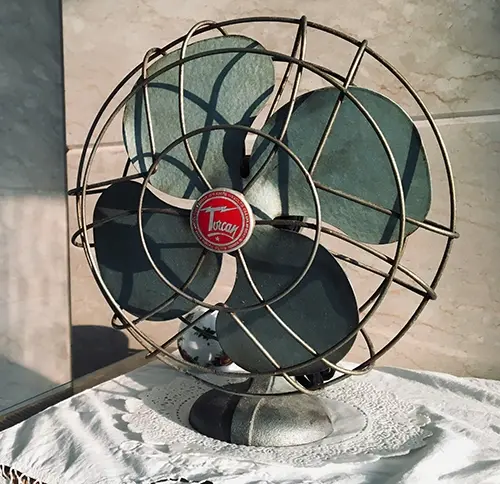
Disposal and Recycling of Window Air Conditioner (AC) Units, Ceiling Fans, and Portable Fans
Window air conditioners, ceiling fans, and portable fans should be handled differently because air conditioners contain refrigerant and compressor oil, while fans are usually made of metal, plastic, wiring, and sometimes electronic controls or rechargeable batteries.
Whenever possible, repair, donate, sell, or reuse safe working equipment before recycling it. If an item no longer works, use a program that confirms it accepts that specific appliance.
Window Air Conditioners
Window and room air conditioners contain refrigerant, compressor oil, metal, wiring, plastic, and electronic components. They should not be placed in household trash, curbside recycling, or a scrap-metal pile unless the receiving facility confirms it accepts air conditioners and manages refrigerant properly.
Why special disposal is required
Refrigerant must be recovered before an air conditioner is dismantled, shredded, recycled, or discarded. EPA rules apply to room air conditioners and other appliances containing refrigerant. The final disposer is responsible for ensuring that refrigerant is recovered through approved procedures. EPA Appliance Disposal
Do not cut refrigerant lines, open the sealed cooling system, attempt to drain refrigerant, puncture the unit, or try to remove the compressor yourself.
Disposal and recycling options
Contact one or more of the following before transporting the unit:
Your electric utility, which may offer an appliance turn-in, recycling, rebate, or bounty program.
Your city or county solid-waste authority.
A local appliance-recycling company.
A scrap-metal recycler that specifically accepts window air conditioners.
An appliance repair company or qualified HVAC technician.
A retailer or installer replacing the unit, which may offer haul-away service.
Ask whether the program will recover refrigerant, whether the unit must be tagged or certified before drop-off, whether a pickup is available, and whether there is a fee. EPA recommends checking with local utilities and municipalities because local disposal procedures differ. EPA Appliance Disposal
If the unit still works
A safe, functioning window AC unit may be suitable for resale, donation, or reuse. Before giving it away:
Clean filters, exterior surfaces, and the drain area.
Disclose the unit’s age, cooling performance, known repairs, and any leaks or unusual noises.
Include the remote control, mounting hardware, and manual if available.
Do not donate a unit that leaks, has damaged electrical cords, produces a burning smell, trips breakers, or has known refrigerant-system problems.
Ceiling Fans
Ceiling fans typically contain metal, plastic, wiring, a motor, and sometimes light fixtures, remote controls, or electronic speed controls. Most ceiling fans should not go in curbside recycling because they are bulky and made from mixed materials.
Reuse and donation
If a ceiling fan is safe and functional, consider:
Donating it to a reuse center, Habitat for Humanity ReStore, thrift store, theater group, school, community organization, or local repair program.
Selling it through a local resale platform.
Saving parts, such as a glass shade, pull chain, mounting hardware, or blades, for repair or reuse.
Do not donate a fan with damaged wiring, cracked blades, loose mounts, broken light sockets, overheating parts, missing safety hardware, or a recalled component.
Recycling options
For a nonworking ceiling fan, contact:
A scrap-metal recycler that accepts electric motors, wiring, and mixed-metal fixtures.
An e-waste recycler that accepts small appliances or electric motors.
A municipal transfer station or bulky-item collection program.
A local appliance recycler.
Some recyclers may accept the full fan. Others may accept only the metal housing, motor, wiring, or brackets. Ask whether light bulbs, glass shades, remote controls, batteries, and mounting hardware must be removed first.
If the ceiling fan has an attached light fixture, remove bulbs only when safe to do so and manage them separately:
LED bulbs: Check local electronics or lighting recycling options.
CFLs and fluorescent bulbs: Use a household hazardous-waste or lamp-recycling program because they may contain mercury.
Incandescent and halogen bulbs: Follow local trash rules. Do not place them in curbside recycling unless your local program specifically allows it.
Do not attempt to remove a hardwired ceiling fan unless you are qualified to do so safely. Consider hiring a licensed electrician or qualified installer.
Portable Fans
Portable fans include desk fans, box fans, tower fans, pedestal fans, handheld fans, and rechargeable personal fans. They usually contain plastic, metal, copper wiring, a motor, and electronic controls.
Working fans
If a portable fan is safe and works properly, consider donating, selling, or giving it away. Clean the fan blades and grille first, and disclose any known concerns.
Do not donate a fan with a damaged cord, loose plug, cracked housing, broken grille, unusual vibration, overheating motor, burning smell, or exposed wiring.
Nonworking fans
For broken fans, check with:
An e-waste recycler that accepts small appliances.
A scrap-metal recycler that accepts electric motors and wiring.
A city or county appliance-recycling program.
A local transfer station or bulky-item collection program.
Fans with metal motors and copper wiring may have recyclable value, but many recyclers will not accept them through curbside recycling.
Battery-powered and rechargeable fans
Some handheld, travel, personal, and rechargeable fans contain lithium-ion or lithium-polymer batteries.
Do not place battery-powered fans in household trash or curbside recycling.
Do not remove a built-in battery unless the manufacturer or recycler specifically instructs you to do so.
If the battery is removable, follow the facility’s preparation instructions. Many programs ask users to cover exposed terminals with nonconductive tape or place each battery in a separate bag.
Take removable batteries to a battery recycler, electronics recycler, or household hazardous-waste program that accepts them.
Take fans with built-in rechargeable batteries to an e-waste recycler or hazardous-waste program that confirms it accepts battery-containing devices.
Lithium-ion batteries can create a fire risk if crushed, punctured, or short-circuited. EPA recommends keeping them out of household trash and curbside recycling. EPA Used Household Batteries
What Not to Do
Do not place window air conditioners in curbside recycling or household trash.
Do not cut refrigerant lines, release refrigerant, puncture an AC unit, or dismantle its sealed cooling system.
Do not place ceiling fans or portable fans in curbside recycling unless your local program specifically accepts them.
Do not dismantle hardwired ceiling fans unless you are qualified and authorized to do so.
Do not place rechargeable fans or lithium-ion batteries in household trash or curbside recycling.
Do not donate equipment with damaged cords, exposed wiring, overheating components, battery damage, or other safety hazards.
Do not assume that a scrap-metal recycler accepts appliances containing refrigerant without confirming first.
Where to Get Help
Item or situation | Who to contact |
Working window air conditioner | Local reuse center, appliance reseller, charity, or utility turn-in program |
Nonworking window air conditioner | Local utility, municipal waste authority, appliance recycler, qualified HVAC technician, or scrap recycler that confirms refrigerant handling |
Ceiling fan | Scrap-metal recycler, e-waste recycler, local appliance recycler, transfer station, or licensed electrician for removal |
Portable fan without a battery | E-waste recycler, scrap-metal recycler, or local appliance-recycling program |
Rechargeable or battery-powered fan | Electronics recycler, battery recycler, or household hazardous-waste facility |
Refrigerant disposal questions | Local utility, municipal waste authority, qualified HVAC technician, or EPA appliance-disposal resources |
Smoking, sparking, overheating, or burning equipment | Move people away and call 911 or your local emergency number if there is an immediate danger |
Sources and Resources
U.S. Environmental Protection Agency, Appliance Disposal
U.S. Environmental Protection Agency, Used Household Batteries
ENERGY STAR, Recycle Other Appliances
Wisconsin Department of Natural Resources, Refrigerant Recovery Program
Cuyahoga Recycles, Dispose of Refrigerant Right
Safety and Legal Notice
Connecting The Dots Project provides this guide for general educational and informational purposes only. It is not legal, technical, electrical, HVAC, safety, environmental, recycling, waste-management, or emergency-response advice.
Disposal rules, accepted items, fees, preparation requirements, refrigerant-recovery requirements, transportation restrictions, and recycling laws vary by location, appliance type, age, condition, manufacturer, and receiving facility. Before donating, transporting, recycling, or disposing of an appliance, contact the manufacturer, local government or solid-waste authority, utility, receiving facility, and qualified service provider for current instructions.
Do not cut refrigerant lines, release refrigerant, open an air-conditioning system, dismantle electrical equipment, remove built-in batteries, or handle damaged, leaking, burned, or overheating equipment unless you are trained, authorized, and specifically instructed to do so by the manufacturer, emergency personnel, or receiving facility.
If an appliance is smoking, on fire, emitting sparks, becoming unusually hot, leaking refrigerant or other fluids, or creating an immediate danger, move people away from the area and call 911 or your local emergency number. Do not attempt to repair, puncture, move, or extinguish the appliance unless directed by emergency responders.
Mention of any company, retailer, recycler, utility, program, certification, or organization is for informational purposes only and does not constitute an endorsement, affiliation, recommendation, or guarantee of acceptance, service quality, safety, or environmental performance.
Connecting The Dots Project does not guarantee that this information is complete, current, accurate, or suitable for every appliance or situation. Use of this guide is at the reader’s own risk.
