


Hydroclimate Whiplash and Wildfire
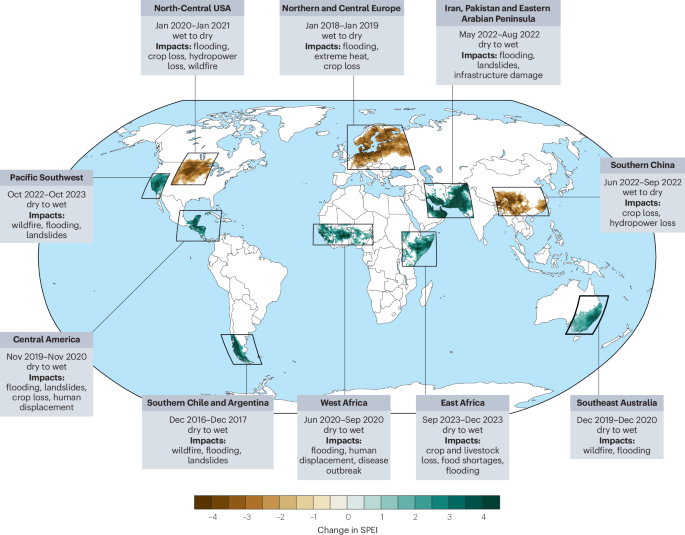
Recent research shows that hydroclimate whiplash, or rapid shifts between unusually wet and dry conditions, can increase wildfire risk, particularly when these swings occur alongside a warming climate.
During unusually wet periods, heavy rainfall can stimulate rapid vegetation growth. When that wet period is followed by heat and dryness, the vegetation can dry out and become highly flammable fuel. At the same time, a warmer climate is increasing evaporative demand, causing water to leave soils and vegetation more quickly and making it harder for landscapes to retain moisture.
Together, these conditions can create a dangerous sequence: wet periods produce more vegetation, while subsequent heat and dryness turn that growth into fuel for wildfire. The result can be larger and more intense fires when ignition occurs.
Parts of California and other fire-prone regions are already experiencing increasingly volatile swings between wet and dry conditions. Climate change can intensify the heat and atmospheric drying that follow wet periods, increasing the likelihood that vegetation will become dangerously dry.
Reducing the risk will require both adaptation and climate mitigation, including improved water and land management, strategic fuel reduction and fire prevention, better early-warning systems, and efforts to limit further warming. Without these measures, increasingly volatile wet-to-dry cycles could put ecosystems and communities at greater risk of severe wildfires.
Sources:
https://newsroom.ucla.edu/.../floods-droughts-fires...
https://phys.org/.../2025-01-links-dry-atmosphere-sponge...
1/10/2025